Jose Rizal is the Philippines’ National Hero. He was born on June 19, 1861, to Francisco Rizal Mercado y Alejandro and Teodora Alonso Realonda y Quintos in Calamba, Laguna. He had nine sisters and one brother. His parents were leaseholders of a hacienda and an accompanying rice farm held by the Dominicans.
Rizal was an ophthalmologist by profession. He became a writer late on and a key member of the Filipino Propaganda Movement, which advocated political reforms for the colony under Spain.
He wrote the novels “Noli Me Tangere” in 1887 and “El Filibusterismo” in 1891, and together, they are taken as national epics, in addition to numerous poems and essays.
By 1896, the rebellion fomented by the Katipunan, a militant secret society led by Andres Bonifacio, had become a full-blown revolution. Rizal volunteered his services as a doctor in Cuba early on and was given leave by Governor-General Ramon Blanco to serve in Cuba to minister to victims of yellow fever.
Rizal was arrested en route to Cuba via Spain and was imprisoned in Barcelona on October 6, 1896. He was sent back to Manila to stand trial as he was implicated in the revolution through his association with the Katipuneros.
While imprisoned in Fort Santiago, he issued a manifesto disavowing the current revolution in its present state and declaring that the education of Filipinos and their achievement of a national identity were prerequisites to freedom. Rizal was tried before a court-martial for rebellion, sedition, and conspiracy and was convicted on all three charges and sentenced to death.
His undated poem “Mi Ultimo Adios”, believed to have been written a few days before his execution, was hidden in an alcohol stove, which was later handed to his family with his few remaining possessions, including the final letters and his last bequests. During their visit, Rizal reminded his sisters in English, “There is something inside it”, referring to the alcohol stove given by the Pardo de Taveras, which was to be returned after his execution, emphasizing the importance of the poem.
Moments before his execution on December 30, 1896, by a squad of Filipino soldiers of the Spanish Army, a backup force of regular Spanish Army troops stood ready to shoot the executioners should they fail to obey orders. The Spanish Army Surgeon General requested to take his pulse: it was normal. As the firing squad began to shoot, Rizal turned around and faced the firing squad.
His last words were those of Jesus Christ, “Consummatum est” – “It is finished.”
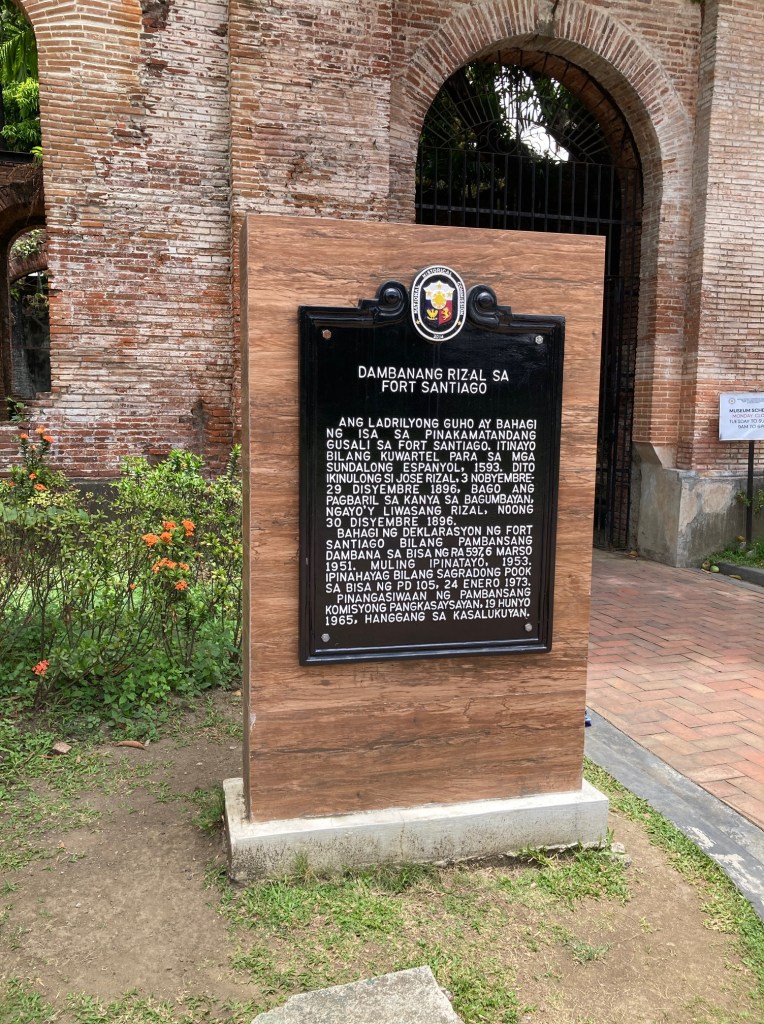
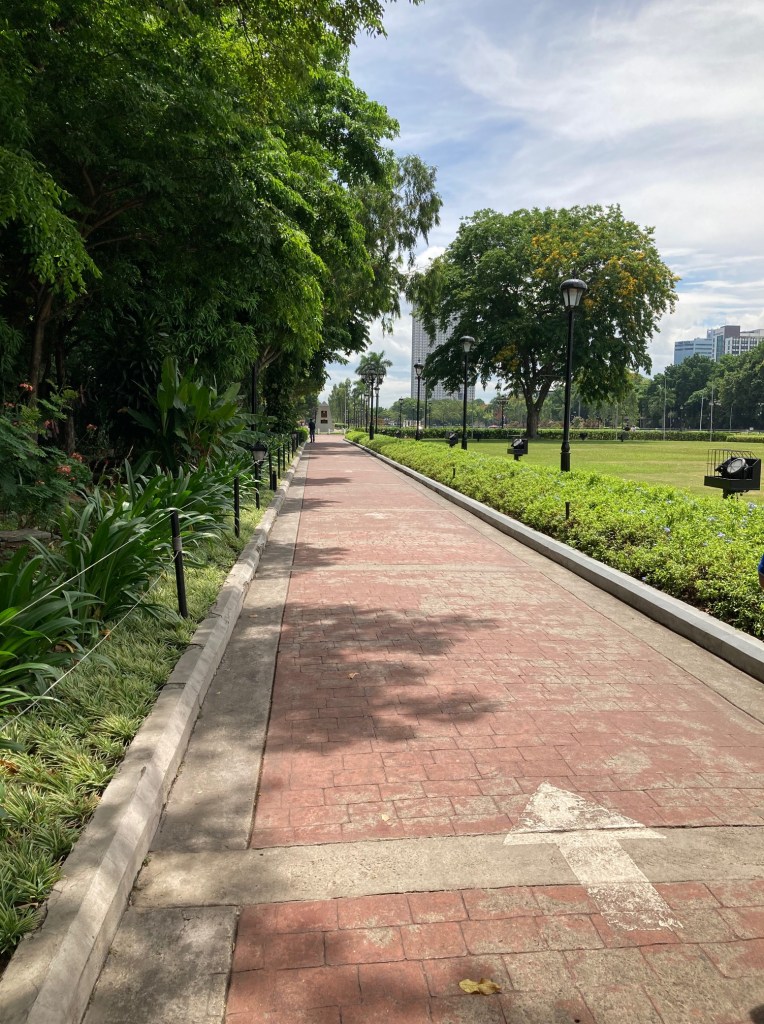
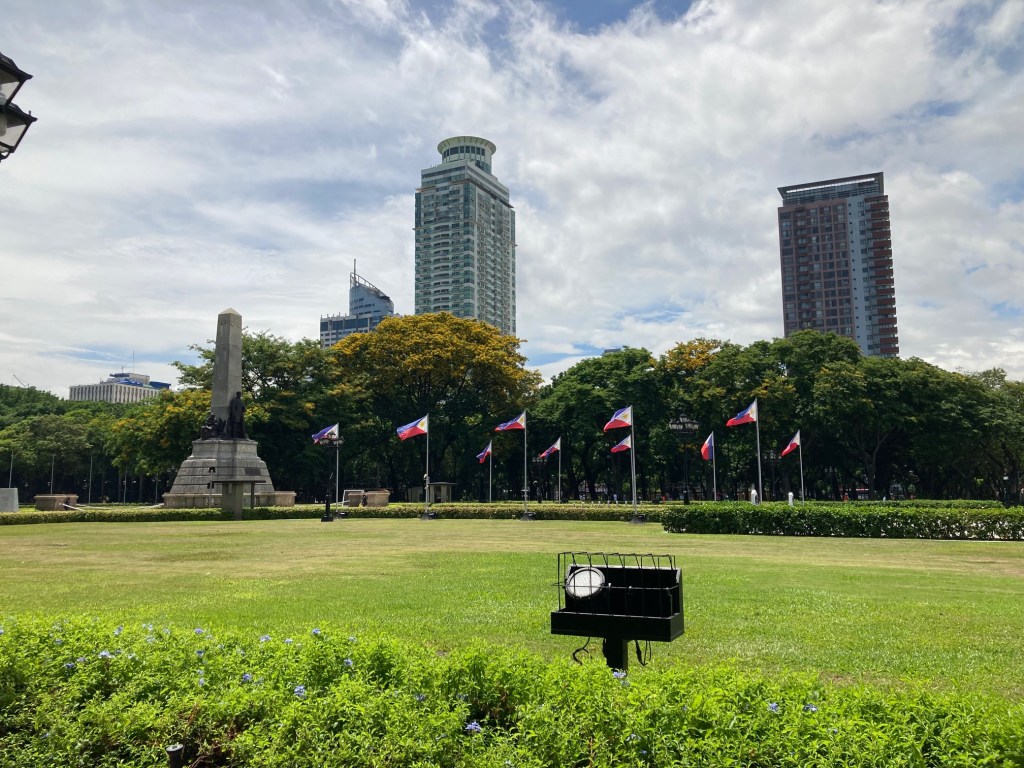
When I went to the Philippines in April this year, I went to see Luneta Park wheren Jose Rizal was executed. Here are some photos:




 Subli
Subli 
I never knew about him, thank you, Rose.
LikeLike
You’re welcome! Rizal’s execution and his two novels ignited the patriotic fervor of the Filipinos to rise against the Spanish rule.
LikeLiked by 1 person
What a beautiful poem written in his last days! And to calmly turn and face his end..knowing in his Heart, this was a NEW beginning. Truly a great man
~❤️~
LikeLike
Kathy, Thank you. He was and is so revered by Filipinos!
LikeLike